“The gap between family income and homeownership opportunities is widening,” he said.
Kahn said those two obstacles are at the heart of the crisis in Keene.
“We know that availability and affordability are the big questions,” he said.

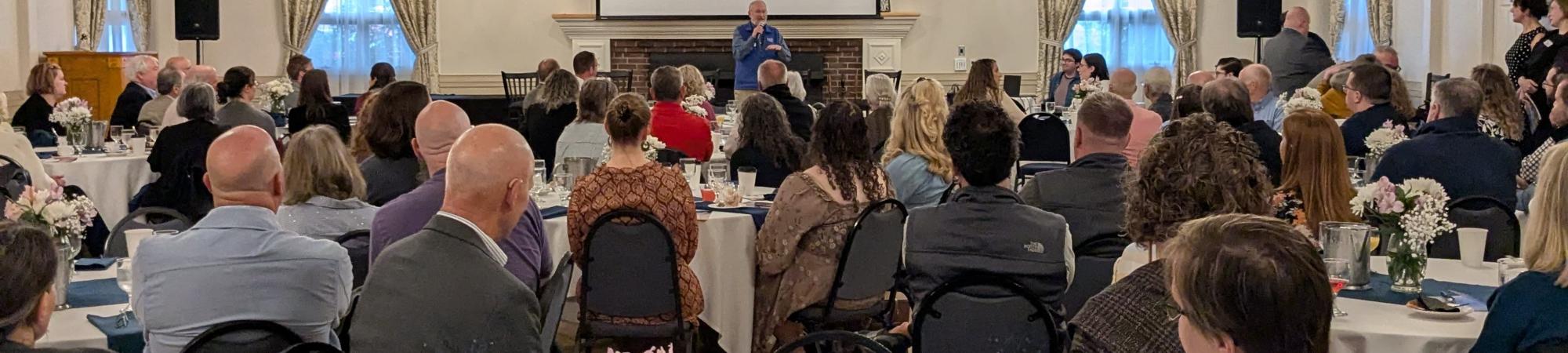
Monadnock United Way is looking to raise over $1.5 million by the end of the year in its latest annual fundraising campaign.
At a campaign kickoff event at the Keene Country Club on Wednesday, the nonprofit announced this fundraising goal, held a panel discussion of the region’s housing crisis, and also handed out this year’s Ken Jue Award.
“Our strength is in bringing our community together to raise funds,” Monadnock United Way President Liz LaRose said. “That happens through the generosity of businesses who run workplace campaigns, people who give through their paycheck, but also a lot of people who give individually.”
United Way is an international charity network that funds economic development projects through grants it delivers to other organizations across the globe. Its focus includes education programs, expanding healthcare access, disaster relief, and teaching financial literacy.
Should the local chapter meet its end-of-year fundraising goal, LaRose said it plans to give $101,000 to the Monadnock Housing Collaborative, an organization that focuses on building homes and lobbying for changes to housing policy.
The annual campaign kickoff also celebrated Laura Gingras, a prolific fundraiser in her own right. Gingras, the vice president of philanthropy and community relations at Monadnock Community Hospital, received the Ken Jue Award honoring her “commitment to community, deep collaboration, and dedication to inclusion in the Monadnock Region.”
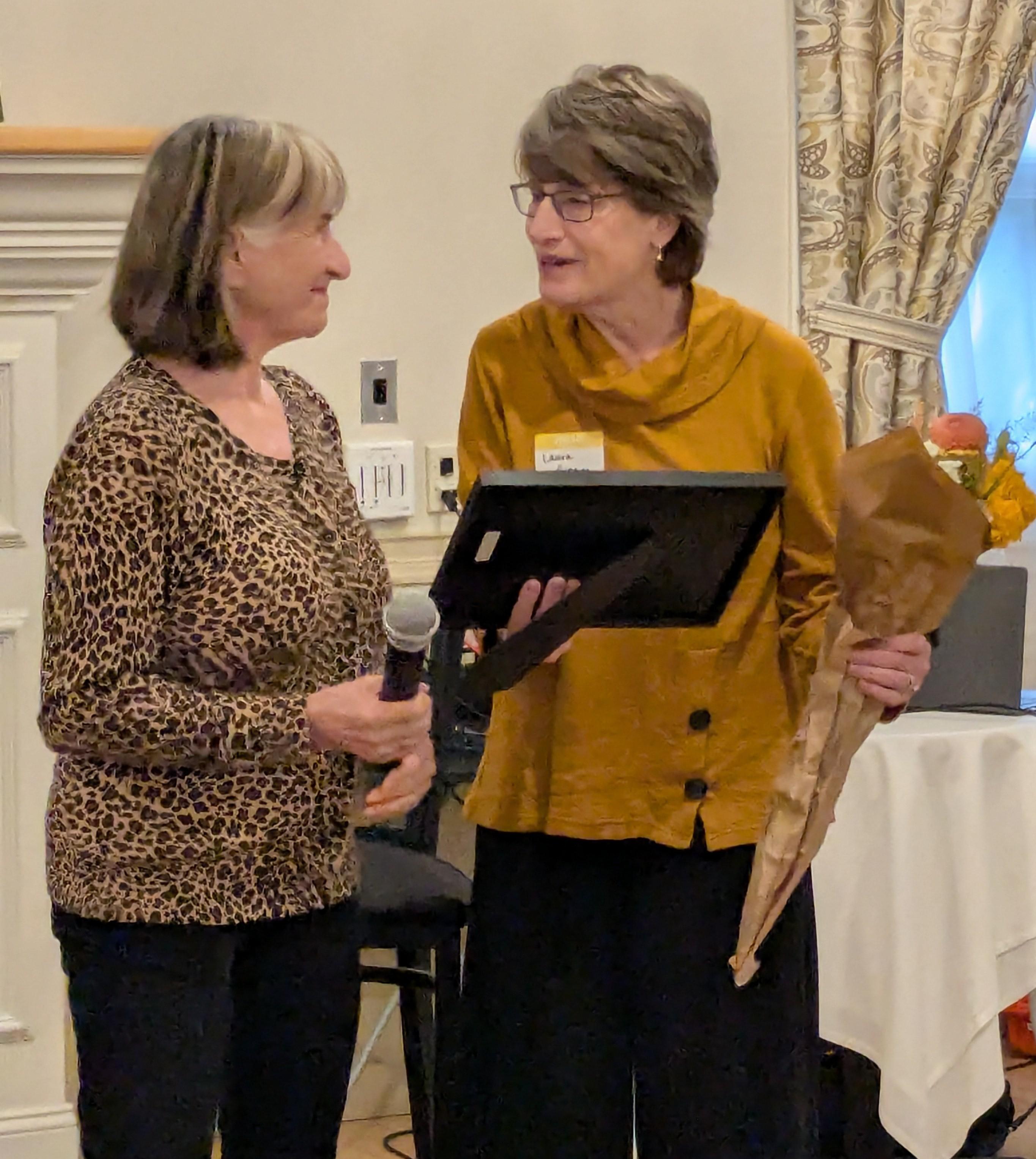
The award is named in honor of Jue, the former CEO of Monadnock Family Services and United Way board member who died in 2022.
“Thank you so much for honoring me with this,” said Gingras, who described Jue as a personal friend. “It is just a joy to be part of good things in this community, and I’ve had so many leaders to show me the way and inspire me … Seeing the leaders who really have gone above and beyond all those years before me, it makes you feel like ‘hey I’ve got to step up. I can’t just coast.’ ”
During the panel discussion, Mayor Jay Kahn spoke about the need for affordable home construction across Cheshire County. He was joined on the panel by housing and business advocates.
Kahn said Keene needs to build 1,400 additional housing units, including 600 for renters.
“Every mayor in New Hampshire has two priorities: workforce and housing,” Kahn said. “We’re making progress [but] not at the rate that we need.”
Panelist Julie Schoelzel, CEO of the Greater Monadnock Collaborative, painted a dire picture of the impact regional housing shortages have had on area businesses.

She said there are currently 1,000 healthcare sector jobs, 500 manufacturing jobs and 500 construction jobs open within a 35-mile radius of Keene, but only 1,200 people in Cheshire County looking for work. She added anecdotally she has heard from multiple employers in the county that they are hoping to double their economic footprint but are unable to find enough workers.
Schoelzel said labor shortages are partly due to housing shortages in the county that make it difficult to recruit from beyond.
“There are multiple ways that the housing situation impacts employers currently in our region and across the state,” Schoelzel said. “I hear from local employers pretty frequently they don’t even bother posting open jobs anymore because they won’t be filled.
“... We know that we have to bring in people from outside the region to fill these roles, but there’s definitely not enough places to put them,” she continued.
Affordability of available housing is another obstacle.
Panelist Sarah Wrightsman, the manager of community engagement and education at N.H. Housing, said the median statewide home price is $575,000 and median rent is over $2,000.
Panelist Matt Keenan, president of Monadnock Habitat for Humanity, said his organization built a home in Troy nine years ago that received zero applicants because of ownership costs.
“The gap between family income and homeownership opportunities is widening,” he said.
Kahn said those two obstacles are at the heart of the crisis in Keene.
“We know that availability and affordability are the big questions,” he said.